
Ayurveda and Joint Pain: Traditional Practices and Safety Considerations
Joint pain can affect people of different ages and activity levels. Stiffness in the knees, discomfort in the shoulders, pain in the hands and difficulty moving after periods of rest can interfere with everyday activities. For people experiencing persistent discomfort, finding a safe and practical approach to joint care becomes an important priority.
Ayurveda, India’s traditional system of medicine, includes dietary guidance, lifestyle practices, herbal preparations and external therapies. Some people explore these approaches alongside conventional healthcare in the hope of improving comfort and maintaining mobility.
However, joint pain can have many causes, including osteoarthritis, rheumatoid arthritis, gout, injuries and infections. The appropriate treatment depends on the underlying condition, and not every traditional remedy has been adequately studied for effectiveness or safety.
At Pure Forest Ayurveda, responsible health education means explaining traditional practices clearly, acknowledging the limits of available evidence and encouraging people to make informed decisions with qualified healthcare professionals.
Understanding Joint Pain Before Choosing a Treatment
Joint pain is a symptom rather than a single disease. It can arise from the joint itself or from surrounding structures such as tendons, ligaments, muscles and bursae.
Osteoarthritis may cause pain during movement and stiffness after rest. Rheumatoid arthritis can produce persistent inflammation, swelling and prolonged morning stiffness. Gout may cause sudden, intense episodes of pain, redness and swelling.
Injuries and infections can also cause joint discomfort and may require prompt medical care.
Because these conditions need different treatments, it is important not to assume that every type of joint pain has the same underlying cause.
Before beginning an Ayurvedic or other complementary approach, consider obtaining a medical assessment, particularly if symptoms persist, worsen or interfere with daily activities.
A hot, red or swollen joint accompanied by sudden severe pain, especially with fever, requires urgent medical attention. Do not delay assessment while trying home remedies.
How Does Ayurveda Approach Joint Health?
Ayurveda traditionally considers diet, daily routines, physical activity and individual characteristics when discussing health. Its approach may include dietary recommendations, lifestyle practices, external applications and herbal preparations.
Traditional Ayurvedic explanations sometimes describe joint symptoms using concepts such as Vata. These concepts belong to the Ayurvedic framework and should not be treated as direct substitutes for modern medical diagnoses.
For example, a traditional description of joint discomfort does not establish whether someone has osteoarthritis, rheumatoid arthritis, gout or a joint infection. Medical assessment may still be needed to identify the cause and determine appropriate treatment.
A responsible approach can acknowledge traditional practices while distinguishing traditional explanations from findings established through clinical research.
Traditional Practices People Explore for Joint Discomfort
1. Personalised Dietary Guidance
Food is an important part of traditional Ayurvedic practice. Some approaches emphasise regular meals, appropriate food preparation and dietary choices tailored to an individual’s circumstances.
From a general nutritional perspective, a balanced diet can help provide protein, vitamins, minerals and energy needed for normal muscle, bone and connective-tissue function.
Suitable foods may include vegetables, fruits, whole grains, lentils, beans, dairy products or appropriate alternatives, nuts and seeds. Individual requirements vary, especially for people with diabetes, kidney disease, liver disease or other medical conditions.
There is no single Ayurvedic diet proven to cure arthritis or reverse cartilage damage. Highly restrictive diets can also create nutritional deficiencies.
Patients should discuss major dietary changes with a qualified healthcare professional or dietitian, particularly if they are losing weight unintentionally or taking medicines that affect blood glucose.
2. Gentle Movement and Daily Routines
Appropriate physical activity can help maintain joint mobility, muscle strength and everyday function. These benefits are relevant whether a person follows Ayurvedic traditions or conventional rehabilitation advice.
Depending on the diagnosis and physical abilities, suitable activities may include walking, gentle range-of-motion movements, supervised strengthening or water-based exercise.
People with persistent arthritis symptoms may benefit from a physiotherapist’s guidance. Exercise should be adjusted for the affected joint, pain level, balance and other medical conditions.
Avoid forcing a painful joint through intense movements. New severe pain, significant swelling or symptoms following a serious injury should be medically assessed before continuing exercise.
3. Massage and External Applications
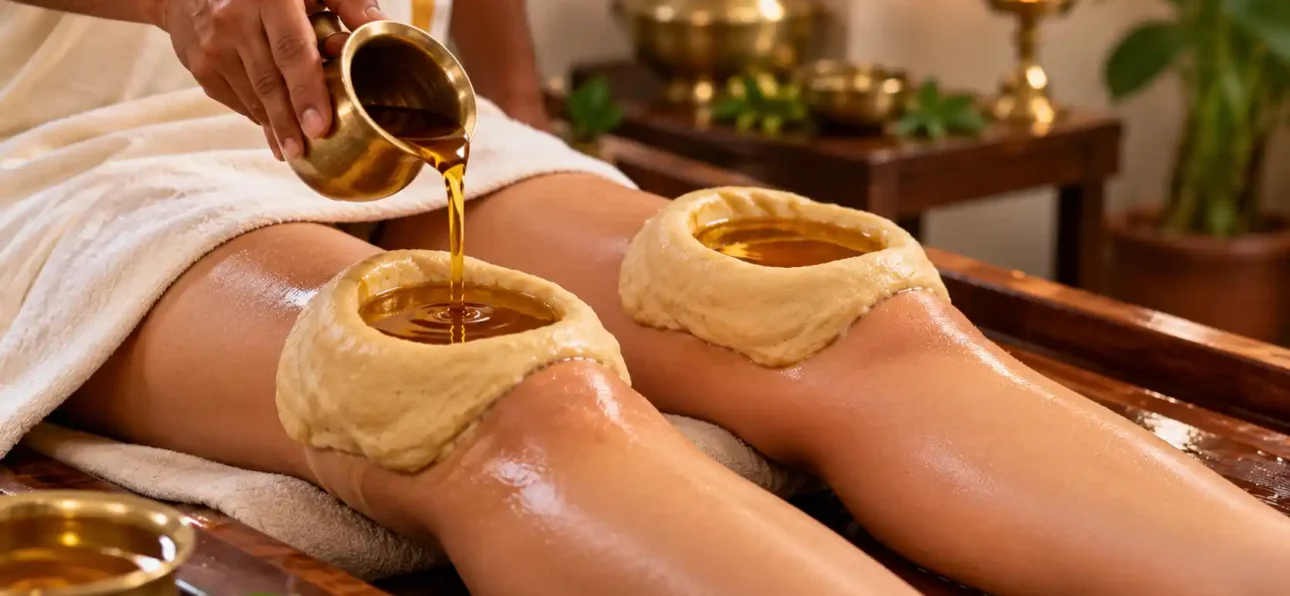
Traditional Ayurvedic practices may include massage or the external application of oils.
Some people find gentle massage relaxing, and comfortable warmth may temporarily ease certain forms of stiffness. However, evidence for particular Ayurvedic oils or massage techniques as treatments for joint diseases is limited and varies by intervention.
Massage does not establish or treat the underlying cause of joint pain. Forceful massage may aggravate an injury or inflamed joint.
Avoid massaging an area that is acutely swollen, hot, red or severely painful until a healthcare professional has assessed it. These symptoms can sometimes indicate infection or another condition requiring urgent treatment.
People with fragile skin, reduced sensation, circulation problems or certain medical conditions should seek advice before using heat or external preparations.
4. Herbal Preparations and Supplements
Some Ayurvedic formulations contain herbs traditionally used for general wellbeing or joint-related complaints. However, evidence for effectiveness differs between ingredients and products, and findings from one preparation cannot automatically be applied to another.
Products can vary in composition, dose, manufacturing quality and purity. They may also cause side effects or interact with prescription medicines.
Some herbal products have been associated with liver injury, and certain preparations may pose additional risks for people with kidney disease or other health conditions. Contamination and undeclared ingredients are also important concerns.
Before taking an Ayurvedic supplement for joint pain, discuss the exact product with a qualified healthcare professional. Provide the ingredient list, dose and manufacturer details where available.
Do not assume that a product is safe simply because it is described as natural or traditional.
5. Relaxation and Stress Management
Persistent pain can affect sleep, mood and confidence in movement. Relaxation practices, gentle breathing exercises and other suitable stress-management approaches may help some people cope with the emotional burden of living with discomfort.
These practices are supportive measures rather than treatments for cartilage damage, inflammatory arthritis or infection.
People experiencing persistent pain-related distress may also benefit from professional counselling or other appropriate support.
What Does Scientific Evidence Say About Ayurveda for Joint Pain?
Evidence should be evaluated for each individual practice, product and condition rather than for Ayurveda as a single intervention.
Research into some traditional herbal ingredients and complementary practices has explored possible effects on pain or physical function. However, studies may differ in quality, size, formulation and duration. Results for one product do not prove that every Ayurvedic preparation is effective.
There is also an important difference between a temporary reduction in discomfort and treating the underlying disease. A person may feel less pain without the condition being reversed or the risk of joint damage being reduced.
For osteoarthritis, evidence-based management may include therapeutic exercise, physiotherapy, weight management when appropriate and medicines selected according to the individual’s circumstances. Inflammatory arthritis may require specific disease-modifying treatment.
People should not stop prescribed medicines or delay recommended treatment because a complementary approach is being considered.
Ayurveda and Different Types of Joint Conditions
Osteoarthritis
Osteoarthritis involves changes in cartilage and other joint tissues. Appropriate exercise, strengthening, physical activity adjustments and medical treatment may help manage symptoms.
Traditional practices may be explored as complementary options only after considering their evidence, safety and compatibility with the person’s treatment plan. No Ayurvedic remedy has been established as a guaranteed cure for osteoarthritis.
Rheumatoid Arthritis
Rheumatoid arthritis is an autoimmune condition that can damage joints if inflammation is not controlled. Early diagnosis and appropriate medical treatment are important.
Herbal products should not replace prescribed disease-modifying medicines. Any complementary approach should be discussed with the treating rheumatologist because interactions and treatment delays may have serious consequences.
Gout
Gout is associated with urate crystal deposits in joints. Treatment may involve medicines to manage acute attacks and, when indicated, long-term urate-lowering therapy.
Dietary changes may support overall management, but they cannot reliably replace prescribed treatment. Sudden severe joint pain and swelling should be assessed, particularly when the diagnosis has not previously been confirmed.
Joint Injuries
Joint injuries may involve ligaments, tendons, cartilage or bones. The correct treatment depends on the nature and severity of the injury.
Massage, oils or herbal products should not be used to delay assessment of a serious injury. Seek medical care for substantial swelling, deformity, inability to bear weight or severe pain after trauma.
Important Safety Precautions Before Trying Ayurvedic Treatments
Before incorporating Ayurvedic practices into a joint-care routine, consider the following precautions.
Discuss products with your healthcare team. Share the names and ingredients of all herbal preparations and supplements you take or plan to use.
Check for medicine interactions. Some products can affect bleeding, blood glucose, liver function or how prescription medicines are processed.
Be cautious with unverified claims. Promises to rebuild cartilage, permanently eliminate arthritis or cure every type of joint pain should be treated sceptically.
Consider existing medical conditions. People with kidney disease, liver disease, diabetes, bleeding disorders or multiple prescriptions may have additional risks.
Avoid delaying diagnosis. Persistent pain, worsening stiffness and recurrent swelling deserve appropriate assessment.
Seek urgent help for warning signs. Sudden severe pain, a hot swollen joint, fever or serious injury should not be managed with home remedies alone.
Building a Practical Joint-Care Routine
A sustainable routine should be based on the person’s diagnosis, physical abilities and treatment plan.
A healthcare professional may recommend regular suitable movement, muscle-strengthening exercises, balanced nutrition and gradual weight management when appropriate. People with persistent symptoms may need physiotherapy, medicines or specialist treatment.
If a person chooses to explore traditional Ayurvedic practices, these should be discussed with their healthcare team and introduced without replacing established treatment.
Keep track of symptoms, activities that aggravate pain and any products being used. This information can help clinicians assess whether the overall plan is appropriate.
Most importantly, avoid judging a treatment solely by short-term comfort. Long-term joint health also depends on maintaining function, identifying the underlying condition and preventing avoidable complications.
How Can Pure Forest Ayurveda Support Informed Joint Care?
For a healthcare brand, responsible communication about Ayurveda and joint pain should balance traditional knowledge with clear explanations of evidence and safety.
Pure Forest Ayurveda can educate readers about lifestyle practices, the importance of individual assessment and the need to discuss herbal products with qualified healthcare professionals.
Content should not promise a guaranteed cure, claim that every case of joint pain has one root cause or encourage patients to discontinue prescribed medicines. Such claims can mislead people who need specific medical treatment.
A personalised approach should recognise that each patient has different symptoms, medical conditions, preferences and treatment needs.
Conclusion
Ayurveda includes traditional dietary, lifestyle, external and herbal practices that some people explore for joint discomfort. Their evidence and safety vary, and they should not be assumed to treat every cause of joint pain.
Balanced nutrition, appropriate movement and suitable relaxation practices may contribute to general wellbeing. Herbal preparations and other interventions require careful consideration, especially for people taking medicines or living with liver or kidney conditions.
The safest approach is to identify the cause of joint pain, follow appropriate medical advice and discuss complementary practices before using them. Informed decisions can help people protect their health while exploring supportive options that fit their individual circumstances.
Medical disclaimer: This article is intended for general educational purposes only. It does not replace medical diagnosis or treatment. Consult a qualified healthcare professional before starting Ayurvedic medicines, herbal supplements or complementary therapies, and seek urgent care for sudden severe joint pain, a hot swollen joint or a serious injury.